
 Mar 10, 2025
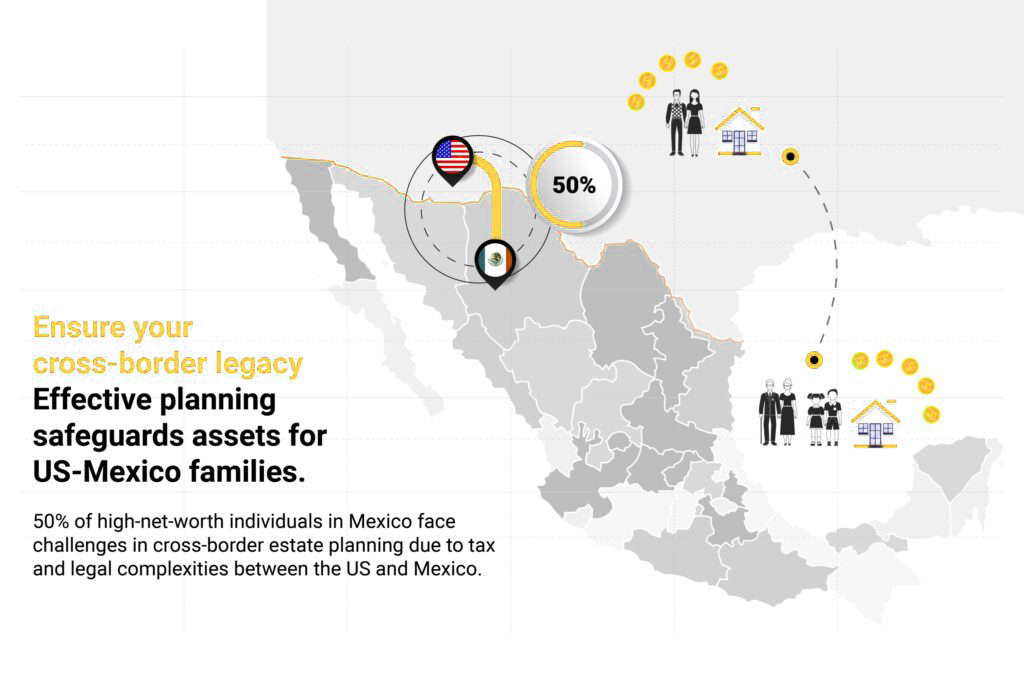
International estate planning is essential for individuals who own assets in multiple countries, such as the United States and Mexico. This type of planning ensures that an individual’s estate is protected, regardless of where their assets are located, by navigating different legal systems, tax regulations, and inheritance laws. Estate planning across borders involves creating a comprehensive plan that addresses how assets will be managed and distributed after death, minimizing the risk of legal disputes, excessive taxation, or unintended consequences for heirs.
The legal frameworks governing estate planning in the U.S. and Mexico differ significantly, creating complexities for cross-border estate planning. In the U.S., estate planning generally falls under federal and state laws, with the process governed by a common law system. This includes the ability to use tools like revocable living trusts and wills to dictate how assets will be distributed. In contrast, Mexico follows a civil law system where inheritance laws are more restrictive, particularly when it comes to forced heirship, which can mandate the distribution of a portion of the estate to certain family members.
Taxation is another critical factor in cross-border estate planning between the U.S. and Mexico. In the U.S., estate taxes are levied on the total value of the deceased’s assets at the time of death, with a generous estate tax exemption available for high-net-worth individuals. However, any assets that exceed this threshold can be taxed at rates of up to 40%. Additionally, U.S. citizens and residents are taxed on their worldwide assets, which means that any foreign assets, including those in Mexico, must be accounted for in their U.S. estate plan.
In Mexico, there is no federal estate tax, but other taxes, such as capital gains tax on property, may apply when transferring assets. For more information regarding to individual tax related to estate planning in Mexico please consult this guide by the International Bar Association
Understanding the differences between domicile and residency is crucial in estate planning, particularly when dealing with assets in multiple countries, such as the U.S. and Mexico. Domicile refers to the permanent home where an individual intends to return to, even if they live elsewhere temporarily. It determines where a person is legally recognized for estate and tax purposes. Residency, on the other hand, refers to where a person physically lives for a specific period, which can impact tax liabilities and other legal matters. For those navigating estate planning or real estate matters in Mexico, consulting an experienced real estate lawyer in Mexico can provide invaluable guidance and ensure compliance with local regulations.
Tax laws in the U.S. and Mexico differ significantly when it comes to estate and inheritance planning. In the U.S., the estate tax applies to the total value of a deceased individual’s estate, with a current exemption of over $12 million (as of 2023). This exemption applies to U.S. citizens and residents, but non-resident aliens only receive a small exemption ($60,000) on their U.S. assets. Any Mexican property owned by a U.S. citizen would be subject to this estate tax if the estate value exceeds the exemption limit.
To minimize the tax burdens associated with owning property in both the U.S. and Mexico, it is essential to employ strategic planning methods. One common approach is to establish a revocable living trust for U.S.-based assets. This trust allows assets, including Mexican property, to avoid probate and the estate tax process, ensuring a smoother transition to heirs. However, it’s crucial to ensure that the trust structure is compliant with both U.S. and Mexican laws, as some types of foreign trusts may not be recognized in Mexico.
When it comes to U.S. estate tax laws, foreign nationals who own property or assets in the U.S. are subject to specific rules that differ from those applied to U.S. citizens and residents. For non-resident aliens (NRAs)—those who are neither U.S. citizens nor permanent residents—the U.S. estate tax applies only to their U.S.-based assets, unlike U.S. citizens who are taxed on their worldwide estate.
For U.S. residents who own assets or property in Mexico, the Mexican tax system presents a different set of considerations. Mexico does not impose a federal estate tax, but other taxes may come into play, particularly when transferring or selling inherited property. For example, if heirs inherit a property in Mexico and then decide to sell it, they may be subject to capital gains tax. The tax is levied on the difference between the original purchase price and the sale price, minus allowable deductions. This could lead to substantial tax liabilities if the property has appreciated significantly in value.
Additionally, any income generated from Mexican assets, such as rental income from a property, is subject to Mexican income tax. U.S. residents must report this income on both their Mexican tax returns and their U.S. tax returns. For more guidance we reccomend this specialized reading reagrding to navigating the complexities of doing business in Mexico, including taxation and legal considerations.
Trusts are a vital tool in international estate planning, particularly for individuals with assets in multiple countries like the U.S. and Mexico. Several types of trusts can be used to manage and protect cross-border estates, each with its specific benefits. In the U.S., common types of trusts include revocable living trusts, irrevocable trusts, and dynasty trusts.
One of the key advantages of using trusts in cross-border estate planning is the ability to mitigate tax implications in both the U.S. and Mexico. In the U.S., placing assets into a revocable living trust allows the estate to avoid the lengthy and costly probate process, which can be particularly challenging for individuals with foreign assets. While assets in a revocable trust are still subject to U.S. estate tax, the trust provides a streamlined way to transfer those assets to beneficiaries without court involvement.
Setting up a trust in the U.S. is generally a straightforward process that involves working with an estate planning attorney to draft the trust document, specifying how assets will be managed and distributed. U.S. citizens often use revocable living trusts to manage domestic and international assets, including Mexican property. The flexibility of these trusts makes them an ideal solution for cross-border estates, as they allow individuals to modify the trust during their lifetime and ensure smooth asset transfer after death.
For U.S. citizens with assets in Mexico, one of the most critical aspects of international estate planning is avoiding double taxation. Double taxation occurs when the same income or asset is taxed by both the U.S. and Mexico, potentially leading to excessive tax liabilities for individuals with cross-border estates. To mitigate this, the U.S.-Mexico tax treaty plays a crucial role in ensuring that U.S. citizens do not face double taxation on their assets in Mexico.
This treaty provides a framework for determining which country has the primary right to tax specific income or assets.
One of the most effective ways to avoid double taxation is through the use of foreign tax credits (FTC). The U.S. offers this credit to individuals who pay taxes to a foreign government, such as Mexico, on income or assets that are also subject to U.S. tax. By claiming the FTC on their U.S. tax return, U.S. citizens can offset taxes paid in Mexico, reducing their overall tax liability.
Estate planning can be complex when dealing with cross-border assets, particularly between countries like the U.S. and Mexico. Without careful planning, individuals can easily make mistakes that result in legal complications and financial losses for their heirs. One common pitfall is failing to create a valid will that is recognized in both the U.S. and Mexico. Different legal systems have distinct requirements for what constitutes a valid will, and a U.S. will may not be sufficient to govern assets located in Mexico.
To avoid these common mistakes, it is essential to draft an estate plan that complies with both U.S. and Mexican laws. One solution is to create dual wills, with one will covering U.S. assets and another will specifically addressing Mexican property. Each will must comply with the legal requirements of the respective country to ensure smooth administration. In Mexico, the will should be signed before a Mexican notary public, as notarization is required for it to be legally recognized. Similarly, ensuring that the U.S. will is valid under U.S. state laws is crucial to avoid any issues with asset distribution in the U.S.
Additionally, to address forced heirship rules, individuals holding assets in Mexico should work with a legal expert familiar with both U.S. and Mexican estate laws.

To gain insight into the complexities of international estate planning, we spoke with MC. Juan Felipe Sánchez, Director of the Corporate Legal Department at MBL. Sánchez shared his expertise on how to address key challenges such as avoiding double taxation and minimizing fiscal burdens for clients with cross-border assets or dual citizenship. Below are some key takeaways from our conversation:
“The real value we bring lies in the initial consultation and the strategic planning phase. It’s during this stage that we truly understand the client’s objectives and design a tailored approach to ensure fiscal efficiency. For example, by choosing the right investment vehicle—whether it’s a trust or a corporate entity—we can take advantage of international treaties to avoid double taxation or reduce unnecessary tax burdens. Our goal is to help clients keep as much of their wealth as legally possible while avoiding leaving money on the table.”
“Another critical moment occurs when a client seeks to acquire property for rental purposes. At this point, we develop a strategy alongside cross-border tax attorneys and accounting teams in both Mexico and the United States. This collaborative approach enables us to not only avoid double taxation but also identify any fiscal benefits that can optimize the transaction. The integration of expertise from both countries ensures that every aspect of the plan aligns with the client’s goals and complies with local regulations.”
“One of the unique challenges we face is when clients have dual citizenship, which often introduces complex regulatory and tax implications. Understanding the specific tax obligations and benefits in both jurisdictions is essential to structuring a plan that minimizes fiscal exposure while meeting all legal requirements. This is where having a multidisciplinary team, including accountants, tax specialists, and legal experts from both countries, becomes indispensable.

Through strategic foresight, deep understanding of client needs, and collaboration with cross-border experts, Sánchez exemplify how careful planning and execution can turn complex legal challenges into seamless solutions.
The complexities of cross-border estate planning between the U.S. and Mexico requires a thorough understanding of both legal systems and tax implications. Individuals with assets in multiple jurisdictions must carefully plan to ensure their estate is protected and efficiently transferred to beneficiaries. Whether you are considering using trusts like revocable living trusts in the U.S. or a fideicomiso for property in Mexico, working with an experienced International Estate Planning Attorney is essential for success.
As global regulations and tax laws change, regularly updating your estate plan is crucial. Staying proactive ensures compliance with both U.S. estate tax rules and Mexican inheritance laws, safeguarding your wealth from unforeseen tax liabilities and legal challenges. You’re probably wondering Is there an Estate Planning Near Me? Where I can get an international estate planning attorney near me? Or even more specific, Where can I find the Best Estate Planning Attorney Near Me? It’s important to choose professionals who are well-versed in global estate planning and can provide personalized guidance for your specific cross-border needs.
Cross-border estate planning is a critical process that ensures your assets are protected and managed effectively across jurisdictions. Without proper guidance, individuals risk facing legal and financial challenges that could compromise their legacy and future goals.
Juan Felipe Sánchez, our expert in cross-border estate planning, understands the complexities involved in managing international estates. His approach focuses on avoiding legal pitfalls, ensuring compliance with regulations, and securing assets for future generations. With extensive experience and a client-centered perspective, Juan Felipe is dedicated to crafting tailored estate plans that address the unique needs of every client.
You can contact him today to begin building a comprehensive plan that aligns with your international estate goals and ensures your legacy is protected.
 Sep 16, 2026
North America is open for business. Companies in India, Europe, Latin America, and Africa that are ready to access the US market now have one coordinated engagement that covers both sides of what a successful entry requires. The legal structure that protects it. The AI marketing infrastructure that makes US buyers trust it.
Aug 11, 2026The firm frames Mexico as a complement to Asia, where speed to market now matters more than labor cost for Indian manufacturers eyeing the U.S. SAN DIEGO, CA, UNITED STATES,…
 Jul 20, 2026
Firm reports rising U.S. demand in Tulum, Los Cabos, and Mexico City, and the role of specialized local counsel in protecting buyers. Mexico Business Lawyers, a cross-border firm serving U.S.-based…

